Spoiler Warning: This blog will contain major spoilers for the movie The Truman Show (1998).
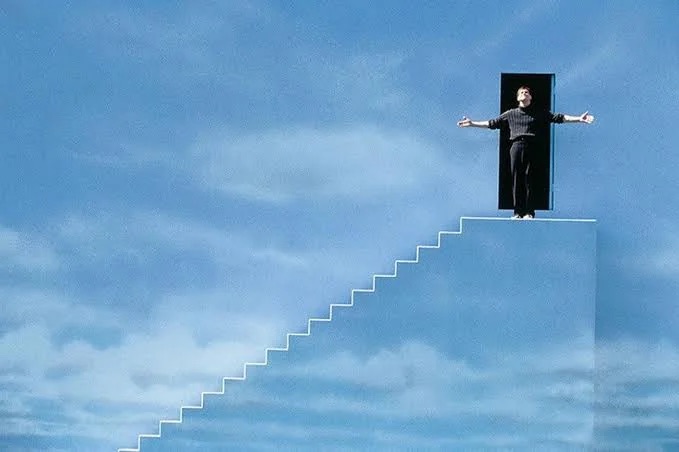
Civic reimagination is the notion that we can imagine alternatives to how society functions. It’s the process of developing creative solutions to cultural, political, social, and economic challenges that can shape a better future. We can see this civic reimagination reflected in our media, and I believe that all movies reflect the cultural and societal zeitgeist of their time. All movies have something to say, despite the filmmakers’ intentions.
That said, the 1998 film The Truman Show was very prescient. The movie follows Jim Carrey as Truman Burbank, the international star of the hit television show of the movie’s title. Except he doesn’t know it. It’s the ultimate reality TV show where Truman’s entire life has been broadcast on live television 24 hours a day since he was born. He lives in a huge, elaborate TV set the size of a city, even visible from outer space. Truman’s environment is artificial, and producers can control everything from the time of day to weather conditions. Everyone he knows and everyone around him are actors. Everything around Truman is a lie.
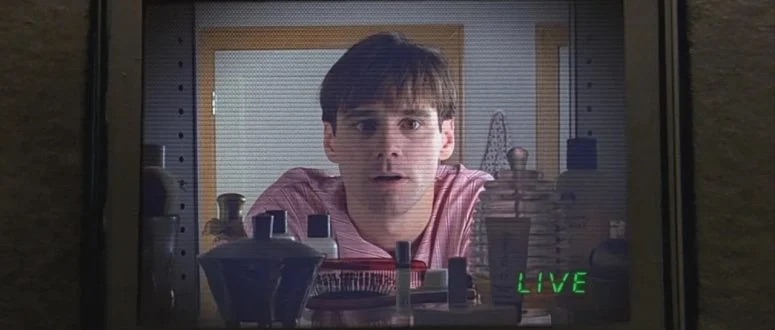
The movie portrays a hyperbolic reimagining of a society that functions around surveillance capitalism and entertainment. Now I know that this doesn’t depict an ideal future, but it can be interpreted as a fear response to the rise of reality television (such as The Real World), the commodification of people, and the emerging culture of voyeurism in the late 90’s. But what makes this film prescient is how this hyperbolic imagined world resembles today’s reality of modern technology and surveillance capitalism. It mirrors the conditions of a society where our personal data is constantly collected and sold. How today our identities and behaviors are kept under observation, and, like Truman… often for profit, without transparency or consent. The Truman Show is a warning that urges civic reimagination.
The world-building of The Truman Show would require much advanced technology, massive coordination, and organization. Everyone (or most people) would need to be “in on it” and complicit with what’s happening to Truman. There would need to be a lot of funding and engineering to build the gigantic dome and the environment in which Truman lives. In this reimagined world, a corporation is legally allowed to control a human life from birth, and then imprison Truman, where his entire life is staged, broadcast, and monetized. While such a scenario is fictional and hyperbolic, it mirrors the technology and social norms we have today. This movie exaggerates systems that already exist in society and predicts a world in which surveillance and media can control a person’s life. Reality TV, influencer culture, and livestream platforms encourage people to turn their daily lives into content and entertainment. Identities are commodified. Examples include the reality TV show Big Brother and streamers on Twitch. Audiences develop parasocial relationships with people they never met, much like the world of The Truman Show.
However, there are some distinctions. Corporations cannot legally own and surveil a person the way it’s depicted in the movie. But I’d argue that not only are influencers and streamers like Truman, but that everyone is like Truman. Modern devices, smartphones, and social media platforms continuously monitor our behavior, track our activity, and scrape data that infringes on our privacy. Online interactions can be disingenuous and artificial, either by automated bots, trolls, orchestrated messaging, or algorithms. The arrival of social media and technology allows us to live a lot like Truman, under constant observation and no privacy. Our lives have become a panopticon where we can be monitored, recorded, and broadcast at any time, even without our consent. Sometimes we aren’t privy to what’s happening.
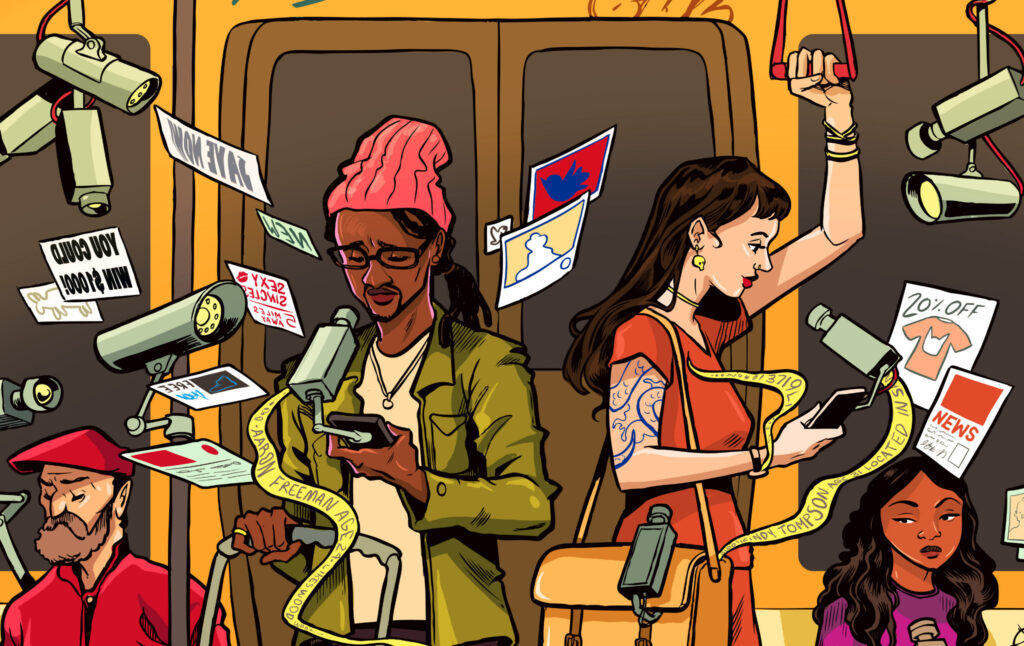
This film forces us to wrestle with technology and reconsider how our society could be organized differently in response to surveillance. Spoilers ahead, but Truman begins to suspect something wrong is going on, and he gains agency. Truman realizes the truth and escapes, rejecting a world that pushes constant observation. This reflects the work of Shoshana Zuboff, author of The Age of Surveillance Capitalism, who criticizes how corporations profit from monitoring and constantly observing people. The civic reimagination is where we, too, can choose not to passively accept systems that normalize surveillance, commodify people, and violate privacy without consent or transparency. When Truman walks up those steps and disappears, he’s walking into a world unknown, but at least he reclaims his agency over his own life. I believe that digital surveillance is in its infancy, and we’re still grappling with the ethics of balancing technological innovation with privacy, transparency, and democracy. We’re also walking into the unknown and figuring out what a better system looks like. Some have already started this kind of civic reimagination, such as The Center for Human Technology, which advocates for healthier and more ethical uses of technology. Before learning about surveillance capitalism, I was a passive user who was comfortable letting corporations take my data, but I’ve changed my mind after learning and understanding how these systems influence behavior as well as violate privacy. To begin this civic reimagining, though, like Truman, we need to choose agency and freedom over simply accepting the system.
 Anthony's Blog
Leave a comment