As a Filipino-American man, my lived experience is rarely depicted in the media. While some representation exists, Filipino identities are often contained and absorbed within the broader representations of Asian-Americans as a whole.
Filipinos are frequently erased in the media landscape, and their cultural identities are seemingly regarded as interchangeable across racial and ethnic lines. There are instances where Filipino-American actors are cast as non-Filipino characters. For example, Lou Diamond Phillips portrayed the Mexican-American singer Ritchie Valens in the 1987 biopic La Bamba, and Oliver in Crazy Rich Asians is a Chinese-Singaporean character played by a Filipino actor, Nick Santos. This reductive flattening of Asian-American representation collapses diverse Asian identities into a single category, masking Filipinos’ authentic cultural identity and heritage.
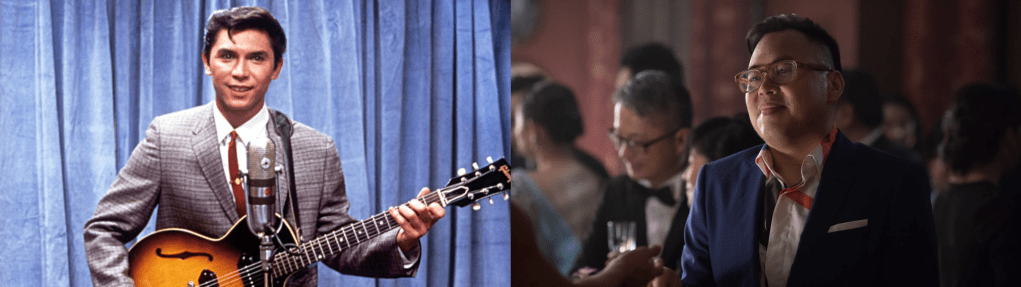
But since Filipino-American representation is so scarce to begin with, this blog post will also end up doing the same thing I’m criticizing. Which is generalizing the discussion of stereotypes against Asian-American men as a whole, rather than focusing specifically on Filipino-Americans.
The stereotype is this: that Asian American men are unmasculine. The media perpetuates this stereotype, portraying Asian-American men as weak, non-assertive, and romantically undesirable. As a caveat, what I’m about to examine isn’t an endorsement of traditional norms of masculinity, but a nuanced examination of how media pushes these “norms” to position Asian American men as inferior and undesirable.
While depictions of Asian-American men have gotten better, media history has perpetuated this stereotype. Asian American men were never leads and cast as side characters, often for comic relief. They’re “otherized” as foreign outsiders and reduced to caricatures of cultural differences. The most glaring example of this is the character, Long Duk Dong, in the 1984 film, Sixteen Candles, who is clearly meant for comic relief and mockery. Not only is he awkward, naive, and embarrassing, but his humanity is stripped. Long Duk Dong is a one-note, cartoonish portrayal of an Asian-American foreign exchange student. Every racist joke punches down on his accent and lack of masculinity. Such depictions do not accurately represent the humanity and range of experiences of Asian-American men.
Another aspect of the demasculinization of Asian American men in media is romantic undesirability and the underrepresentation as romantic leads. Western action protagonists, such as James Bond or Han Solo, are frequently portrayed as dominant, tough, and romantically desirable. But Asian-American men are emasculated as non-assertive and often excluded from romantic narratives. In the 2000 film Romeo Must Die, starring Jet Li and Aaliyah, Li is a strong and capable fighter. There is an implied romance between the two leads, and while a kissing scene was shot, it was left on the cutting room floor. The rumor is that the scene performed poorly in test screenings. Another example is the martial arts action star, Bruce Lee. While Lee was portrayed as traditionally masculine and physically tough in his films, he never played romantic roles or ever had an on-screen kiss. That said, my issue isn’t simply the absence of romance itself or an entitlement to romance for Asian men, but my issue is the absence of writing Asian-American characters who are complex and fully realized with a range of emotions that include romance and intimacy.
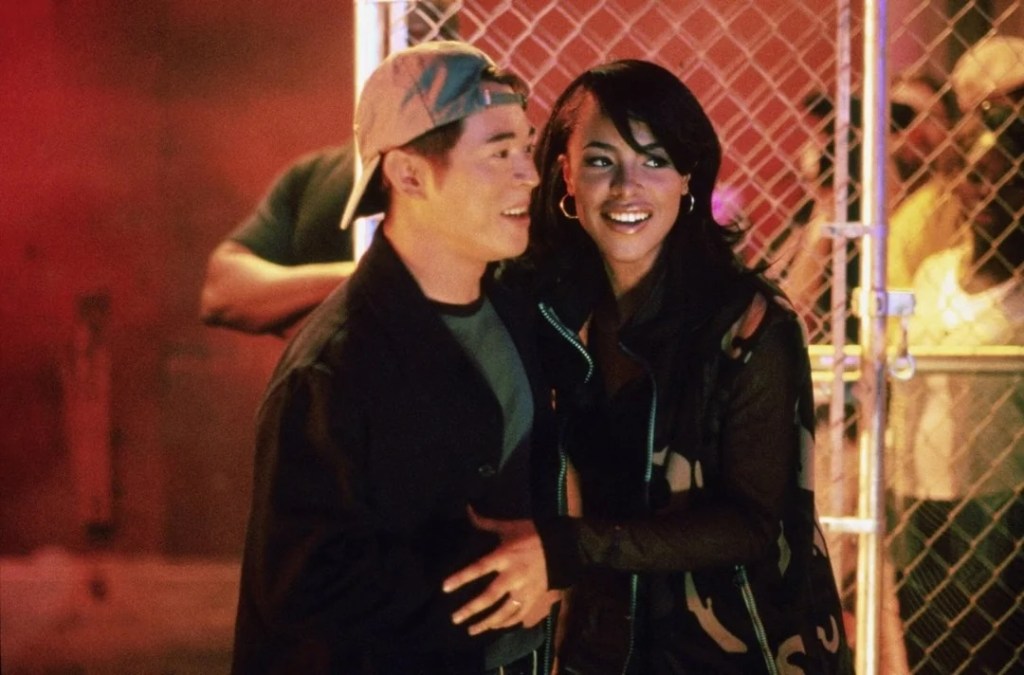
While today there are examples of Asian-American men as romantic leads, such as Glenn from The Walking Dead or Henry Golding in Last Christmas, these feel like rare exceptions. The history of these depictions could have lasting effects.
The reason why this stereotype is harmful, especially in the media, is that it could cause society to generalize and feed into biases that all Asian-American men are weak, passive, or undesirable.
Such assumptions influence how people perceive and treat Asian-American men in the real world. In the professional world, this stereotype can lead people to be taken less seriously or overlooked for leadership roles. Anecdotally, I have experienced microaggressions, such as being directly called “too quiet” or “too nice” to be a manager, despite having over a decade of management experience in various GM and Area Manager roles.
These portrayals can also perpetuate racism in dating biases and social relationships. In some instances, this has contributed to the troubling Men’s Rights Asians movement, who have reacted with entitlement and misogynistic rhetoric.
That said, I’m not encouraging Asian-American men to conform to traditional notions of masculinity, but I’m critical of how stereotypes perpetuated by the media can shape public perception. We also just need more Filipino and Asian-American representation as fully realized characters that run the gamut of emotions.
 Anthony's Blog
Leave a comment